
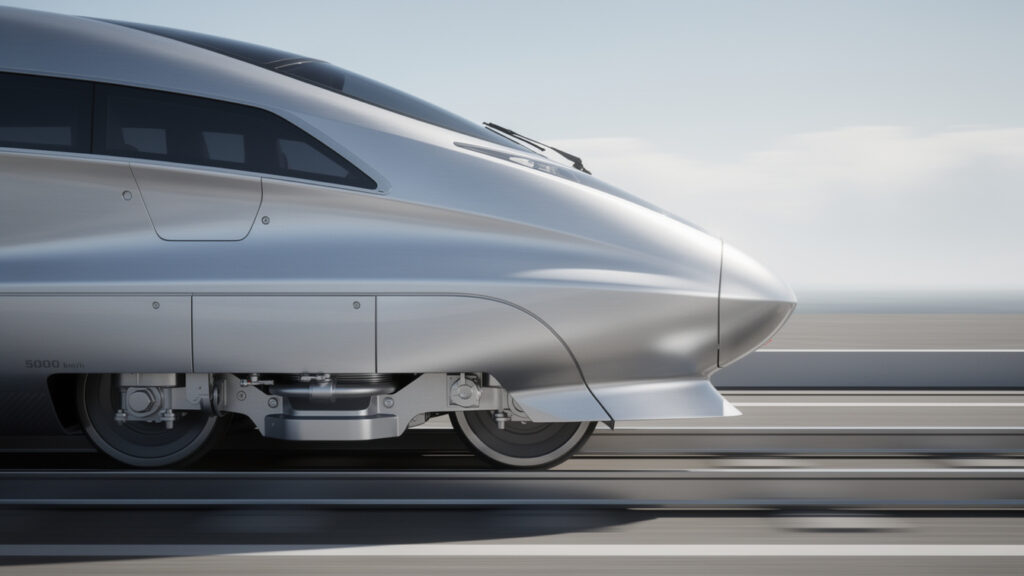

The world of transportation technology has just hit turbo speed. In December 2025, a cutting-edge maglev train achieved the extraordinary feat of breaking every speed record, clocking in at a staggering 600 km/h (373 mph). This leap in speed isn’t just about numbers; it signals a seismic shift in how we might travel in the near future. Buckle up as we delve into the speeds, sounds, and implications of this revolutionary train.
Highlights
- 🚄 Record-Breaking Speed: The maglev train reached 600 km/h during tests, positioning itself as the fastest train in the world.
- 🌍 Technological Marvel: Developed by China, leveraging magnetic levitation technology, it boasts no friction for ultra-fast travel.
- 📉 Reduced Travel Times: The train could cut travel from Beijing to Shanghai to under three hours, changing how we think about distance.
- 🌱 Sustainable Innovation: Advanced design mitigates sound pollution, making this speed a greener option for future transportation.
Did you know that the fastest commercial trains currently operate at around 300 km/h, making the maglev’s 600 km/h a game changer in rail innovation?
The Technology Behind Maglev Excellence
So, what exactly makes this maglev train tick? At its core, the technology utilizes superconducting magnets to levitate above the track. This design eliminates friction, allowing it to reach jaw-dropping speeds without the physical limitations of traditional rail systems. During testing, video footage showcased the train shooting down a 400-meter magnetic levitation track like a silver bullet—almost impossible to follow with the naked eye.
The engineering aspects are no less impressive. Experts have tackled fundamental challenges, such as high-speed electromagnetic propulsion and transient energy storage. These breakthroughs could even find applications beyond rail travel, hinting at uses in aerospace—imagine a rocket launching faster and more efficiently thanks to the same technology!
Revolutionizing Travel Between Megacities
This maglev train isn’t just hyper-fast; it presents itself as a pivotal innovation in high-speed rail travel. A potential journey from Beijing to Shanghai, usually taking around 4 to 4.5 hours, can now be distilled to about 2.5 to 3 hours. This isn’t merely a reduction in travel time; it’s a complete overhaul of how people envision intercity journeys. For the business traveler or adventurous weekend warrior, this speed offers unprecedented flexibility.
Not only does this redefine same-day travel, but it also influences economic ties between major cities. As distances shrink, opportunities for commerce and tourism between urban hubs expand exponentially. The demand for rapid transit systems is likely to surge, leading to a cascading effect on infrastructure development and urban planning.
Addressing Environmental Concerns
While speed is a thrilling prospect, it often comes with noise and environmental concerns. The maglev train addresses this through innovative soundproofing solutions. The “tunnel boom” effect—sharp sounds generated when a train exits a tunnel at high speeds—is effectively minimized with new designs that permit airflow. Engineers have created 100-meter-long soundproof buffers and various coatings to manage air pressure, reducing these sounds by up to 96%.
This commitment to responsible engineering ensures that advancements in high-speed rail don’t come at the cost of environmental stewardship. As more innovations like this emerge, it’s a hopeful reminder that speed and sustainability can indeed coexist.
A Glimpse into the Future of High-Speed Travel
What’s on the horizon for the maglev world? With the successful trial, the potential for deploying this technology across the globe looks promising. Countries looking for alternatives to traditional air travel should be taking notes. The speed offered by these trains could easily rival that of short-haul flights, transforming business travel and reducing the carbon footprint associated with aviation.
Furthermore, collaborations between engineering firms around the world are expected to accelerate the adoption of maglev technology. The integration of German engineering principles with China’s innovative spirit creates a potent formula for worldwide change. We might soon find ourselves living in a reality where ultra-fast trains are as normal as buses.
Embracing the Change
As the dust settles from this recent record-breaking speed, it’s crucial to think about how we can embrace these changes in our daily lives. Adaptation to ultra-fast rail travel isn’t just about hopping on a train; it redefines our approach to commuting, leisure, and the business of travel. The allure of faster journeys offers endless possibilities, whether for connecting family, careers, or cultures.
To navigate this new landscape, staying informed about advancements in transportation technology will be key. Participate in discussions, weigh in on rail innovations, and advocate for forward-thinking policies. Each of us has a role to play in shaping the future of our transport systems.
So, gear up for a world where high speeds redefine what’s possible. The maglev train has not only broke speed records but reimagined the future of travel. The question now is: are we ready to ride the wave of change?
Until next time, keep your eyes on the tracks, and enjoy the journey ahead!