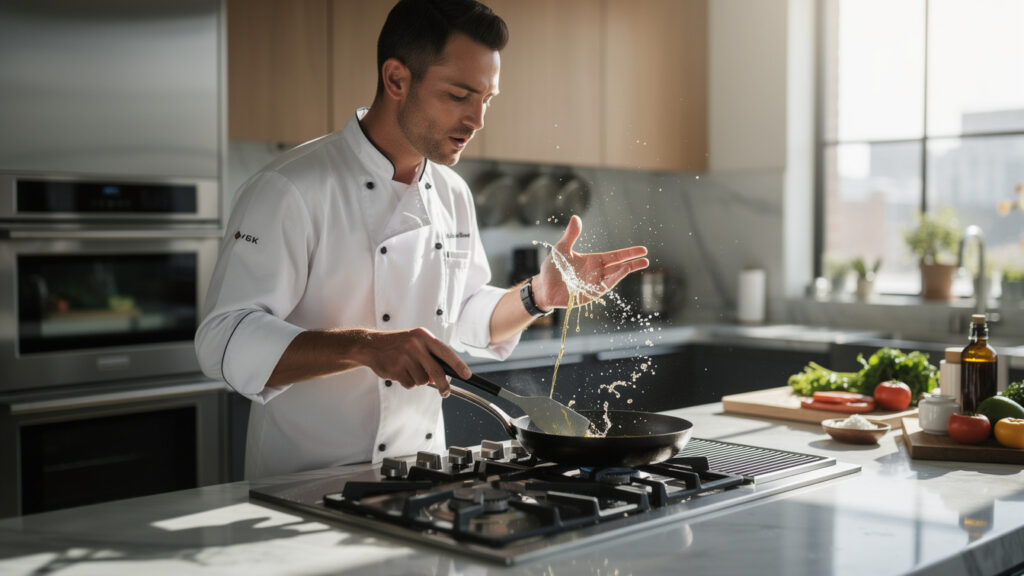

Every time I step into the kitchen and heat up oil, I can anticipate those beastly splatters. It never fails: the oil starts to shimmer, and as soon as I introduce my ingredients, an impromptu oil shower ensues. It’s a curious phenomenon that leaves many of us flinching, dodging those tiny bursts like we’re in a cooking battle. So, why does this happen? It turns out, there’s science behind that sizzling chaos.
Highlights
- 🔥 The Science of Splatter: Oil reacts violently with moisture from food.
- 💧 Moisture Matters: Water content in your ingredients increases splattering.
- 🌡️ Temperature Control: High heat can exacerbate the problem.
- 👩🍳 Cooking Tips: Simple hacks can reduce the mess significantly.
- 🧯 Safety First: Understanding splatter can prevent burns and hazards.
The underlying cause of oil splatter is often tied to the moisture present in the foods we cook. Even if you think you’ve dried your vegetables thoroughly, there’s still some moisture lurking. When these damp ingredients hit the hot oil, the magic—and chaos—ensues. Water instantly flashes into steamy vapor as it rapidly heats up, creating explosive pressure that pushes bits of oil out of the pan. It’s almost as if the oil takes personal offense at being mixed with water!
The Dynamics of Heat and Oil
Let’s dig deeper into the heat dynamics. When oil is heated, it undergoes a physical change, decreasing its viscosity. This makes it more likely to splash as it bubbles and froths. The oil also expands dramatically at high temperatures—think of it as a mini volcano ready to erupt. Every professional chef knows that temperature control is critical, and this is a prime example. If the oil is too hot, the splatter can become hazardous. The danger is not just the mess but also the risk of burns. Sadly, I’ve learned that the hard way too many times.
Next time you find yourself in oil-splashing warfare, consider how you’re introducing your ingredients. Tossing them carelessly into the pan creates turbulence—a surefire way to launch oil everywhere. Instead, gently lower them in, minimizing the big splash effect. And let’s talk equipment: using a high-quality, heavy-bottomed pan can distribute heat more evenly, reducing hot spots that lead to excessive splattering.
Pro Tips for Minimizing Oil Splatter
Let’s explore some practical tips that can significantly cut down on those pesky messes:
- 🧂 Dry Thoroughly: Before cooking, pat ingredients dry with paper towels. This simple step can make a world of difference.
- 🌿 Salt It Up: A pinch of salt added to hot oil can reduce spitting and popping.
- 👩🍳 Right Pan Choice: Invest in a good stainless steel pan. Not only does it cook better, but it also minimizes splatter.
- 🔒 Splatter Guard: Consider using a splatter screen or lid while frying to catch the escapes without disrupting airflow.
Think of meals that require a bit of finesse, like sautéed vegetables or perfectly pan-fried chicken. Every chef aims for that ideal balance of crispy and tender without the aftermath of a grimy stove top. Drying your ingredients and using the right tools is half the battle won.
The Importance of Food Safety
With all the splashing and jumping about, it’s crucial to be mindful of food safety. Hot oil presents unique risks, not only in terms of burns but also contamination. To ensure your cooking remains safe, here are a couple of things to keep in mind:
- 🔥 Never Add Water: Pouring water into hot oil is akin to inviting trouble—never do it!
- 🚨 Stay Alert: Monitor your cooking closely. Unattended hot oil can easily reach its smoke point, leading to flare-ups.
In every kitchen scenario, awareness is key. Understanding why oil reacts the way it does allows us to adopt safer cooking methods that can drastically reduce accidents. It’s not just about the mess in your kitchen; it’s about protecting yourself and those around you.
Wrapping Up Preparedness
While oil splatter might be inevitable, mastering the methods to handle it leads to a more enjoyable cooking experience. Think of it—having tactics at your disposal can make frying feel like a less daunting task, ultimately translating into a more pleasant atmosphere in the kitchen.
As you gear up for your next cooking session, remember these insights into why oil splatters and how to counteract it: maintaining moisture levels, controlling heat, and employing thoughtful techniques can all make a world of difference. The journey in the kitchen can be delightful, with the right know-how turning that oil splatter into just another nuance of culinary art. Happy cooking!