
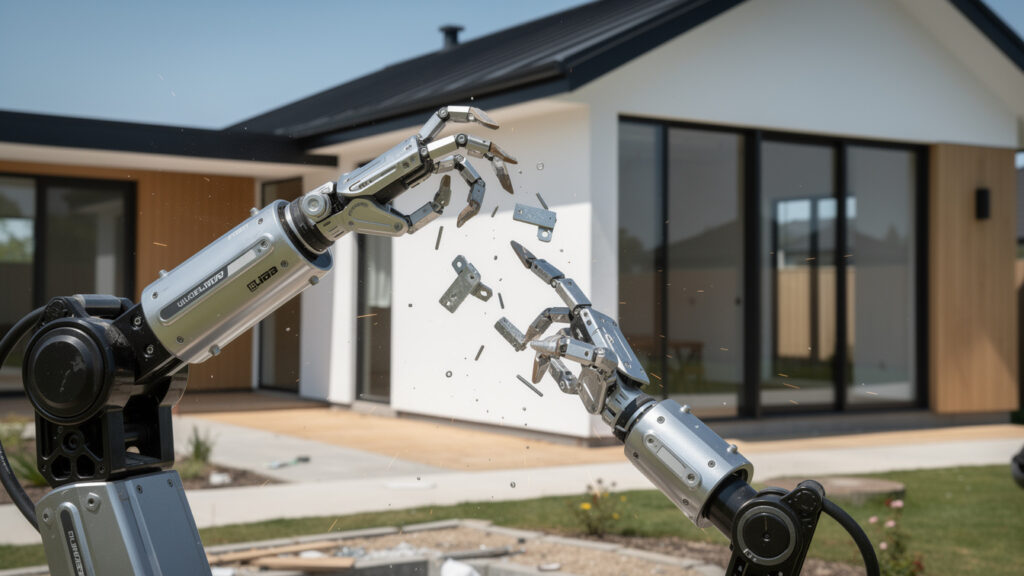

Imagine a world where the dream of affordable housing becomes a reality, crafted in just a day. At the forefront of this evolution is a remarkable innovation: a robot that can construct a complete, 200-square-meter home in a mere 24 hours. This isn’t some far-fetched fantasy; it’s the dawning of a new era in construction, poised to address one of society’s most urgent challenges—the housing crisis.
Highlights
- Speed of Construction 🚀: Homes that typically take months can now be built in just about 24 hours.
- Cost Efficiency 💰: Significant reduction in labor and material waste can lead to more affordable housing options.
- Safety First 🦺: Automation can mitigate many dangerous tasks, enhancing worker safety on-site.
- Precision Engineering 🎯: Robotic construction achieves millimeter-level accuracy, ensuring high quality and integrity.
Did you know? A single robotic system can match the output of over 100 skilled workers, all while using locally sourced materials!
The Evolution of Robotics in Construction
The application of robotics in construction isn’t entirely new. For decades, robots have thrived in controlled factory environments, performing repetitive tasks with precise accuracy. Yet, transferring this technology to the often chaotic landscape of construction sites posed a significant challenge. Unlike a manufacturing floor, the sites face exposure to weather and unpredictable conditions. Innovations in robotics have led to the creation of machines equipped with artificial intelligence and sensors, making these units not only powerful but also adaptable to real-world complexities.
This leap brings us to a fundamental disruption in the industry where traditional building methods have remained relatively stagnant for over a century. With human labor slow and often error-prone, the introduction of intelligent machines shifts the paradigm towards a more efficient and data-driven construction model. As robots take over more roles, the build time for homes drops drastically—what used to take months can now occur within mere hours. Imagine how this could solve the growing crisis of affordable housing!
How the 24-Hour Home Construct is Achieved
The technology primarily driving this remarkable feat is a gantry-style robotic system that acts similarly to a massive 3D printer. This machine operates on-site, using rails positioned around the planned footprint of the home. It follows a digital blueprint, most often a Building Information Modeling (BIM) file, detailing every aspect of the structure. The robotic extruder then deposits a specialized building material layer by layer, continuously and consistently, constructing the walls and frames.
The automation doesn’t stop there. Integrated sensors and laser scanners track the construction environment, allowing the robot to adjust its path in real-time. By monitoring material consistency and curing rates, it ensures optimal structural integrity. A stark comparison shows traditional construction involving numerous workers versus a robotic approach needing only a few supervisors—a testament to how far we’ve come.
Advanced Materials: The Unsung Heroes
The materials used play a crucial role in this rapid construction. Standard concrete simply won’t suffice. Innovative fast-curing concrete blends are often utilized, designed to flow easily through the printer’s nozzle yet solidify almost instantly after application. These advanced formulations typically include:
- High-performance cement for durability.
- Recycled aggregates to lessen environmental impact.
- Special polymers and admixtures to enhance strength and reduce setting time.
- Reinforcing fibers integrated into the mix for added stability.
The beauty of this system doesn’t just lie in its speed but also in its holistic construction approach. As the robot builds, it creates predefined spaces for plumbing, electrical, and even data wiring within the walls. This integration minimizes later labor and enhances speed, contributing to the impressive 24-hour timeline.
The Environmental Impact of Rapid Construction
Traditional construction is notoriously wasteful, generating tons of debris that usually end up in landfills. Robotic construction, however, is additive in nature. The machine adds material only where needed, leading to waste reduction to less than 5%. Material can also be mixed on-site, greatly diminishing transportation emissions related to large precast components.
The airtight nature of robotic layering births homes that are energy-efficient, needing less energy for heating and cooling. With reduced utility bills and a smaller carbon footprint, this technology champions a sustainable future. Coupled with the use of locally sourced materials, the potential for environmentally friendly development is immense.
Addressing the Housing Crisis with Innovation
The implications of this groundbreaking technology extend far beyond individual home ownership. With the existing housing crisis largely stemming from a mismatch between supply and demand, a drastic increase in building rates could alleviate this tension. Rapid construction means it’s possible to significantly boost the availability of quality housing, making homeownership attainable for many.
Moreover, in the aftermath of natural disasters, this technology can be a game-changer. The ability to quickly deploy robots to build durable shelters can mean the difference between temporary relief and permanent homes for displaced families. Such applications hold vast potential for both urban renewal and emergency response.
The Road Ahead: Challenges and Opportunities
With every building designed and every technology implemented, we inch closer to a sustainable and inclusive future. This is not just about homes; it’s about community, dignity, and hope for generations to come.Taking Action