
Let’s face it—a garden should be a tranquil haven, not a buffet for every curious squirrel and crafty rat. If your bird feeders have turned into an all-you-can-eat paradise for these critters, it’s time for a natural shift. The key? Use a simple kitchen ingredient that doubles as a potent pest deterrent, effortlessly warding off those fur-coated invaders without risking your pets or plants. We’re talking about capsaicin, found primarily in hot peppers, and it could just become your new best friend when it comes to wildlife protection!
Highlights
- 🌶️ Capsaicin is an effective natural repellent that keeps both squirrels and rats at bay.
- 🧄 Garlic, vinegar, and peppermint oil are additional scents you can easily utilize from your kitchen.
- ⚠️ Emphasizing non-toxic methods ensures garden safety and the well-being of the environment.
It’s no secret that squirrels can be utterly destructive. Their penchant for raiding bird feeders or digging up gardens can leave any gardener seething. Squirrels are particularly tricky; they breed biannually, which means a sudden uptick in pesky little mouths to feed. Knowing this can be overwhelming, but understanding their senses can help us deploy effective repellent strategies!
Why Capsaicin Works So Well
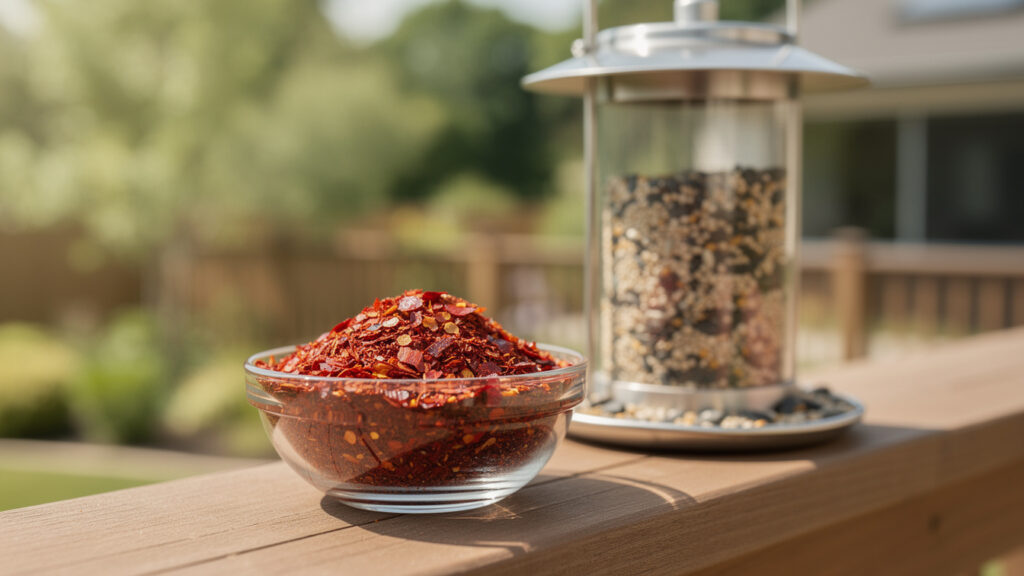
Capsaicin, the compound that brings the heat to chili peppers, also acts as a formidable pest deterrent. Simply put, it irritates the nasal passages of squirrels and rats. Remember the last time you bit into a spicy pepper? The burning sensation isn’t just for humans; it works wonders in signaling unruly rodents to stay away.
Consider this: when you sprinkle chili powder around your bird feeders, you send a message to these furry nuisances: “this spot is not for you!” A quick DIY recipe? Mix one tablespoon of chili powder with two cups of water in a spray bottle. Shake it up, let it sit for an hour, and you have your very own garden barrier!
Integrating Other Kitchen Ingredients
While capsaicin may steal the spotlight, you can round out your arsenal with various other scents. Garlic is notorious for its strong odor, which can mask the smell of your plants and deter pests effectively. Crush a few cloves and scatter them near your garden. Not only is this effective, but it also gives off a delightful aroma for humans—at least until it fades.
White vinegar works wonders as well. As an acidic substance, its scent is quite strong, emitting an odor that squirrels detest. Consider mixing it in a spray bottle (one part vinegar to three parts water) and applying it to problem areas, being cautious around delicate plants to avoid any unintended damage.
Garden Safety with Non-toxic Methods
It’s crucial to prioritize garden safety and use non-toxic methods to protect our wildlife. You don’t want to resort to traps or poisons that may harm not only squirrels and rats but also harmless critters or even pets roaming nearby.
Using essential oils is another excellent approach. For instance, peppermint oil is a favorite among gardeners for its overpowering freshness that squirrels can’t stand. Soak cotton balls in peppermint oil and place them near entry points and around bird feeders. Just remember to keep it fresh—reapply frequently, especially after rain!
Alternative Scented Barriers for Your Home and Garden
As you explore the boundaries of your garden, keep an eye out for other natural, effective repellents. Cinnamon is another option. This sweet spice can be scattered around in ample amounts, its strong aroma acting as a warning sign to your furry foes. Just be prepared to refresh these scents every few days due to wind and weather conditions.
- 🍽️ Keep coffee grounds handy; squirrels tend to dislike the scent and they make great compost!
- 🍊 Citrus peels can work wonders too—squirrels have a strong aversion to the zesty smell.
- 🧴 Predator urine, although a bit unconventional, certainly sends a strong message to squirrels that danger lurks nearby.
Each of these scents creates a sensory minefield that makes your yard less friendly to unwanted guests. But here’s the secret sauce: mixing and matching these scents might yield even better results. Imagine the powerful smell of chili powder combined with the freshness of peppermint—now that’s a deterrent combo!
Implementing Effective Scent Strategies
While it’s essential to use these scents, proper application can make or break your pest control efforts. Here are some quick tips:
- 🔄 Rotate scents frequently to prevent critters from getting accustomed.
- 🌧️ Reapply after a heavy rain to maintain effectiveness.
- 📍 Focus on hotspots: target areas where you’ve identified squirrel or rat activity.
By creating barriers of scent that repel, your efforts can lead to a secured bird feeder and a flourishing garden—without needing invasive measures.
With the right strategies and natural ingredients at your disposal, there’s no need to resort to unhappy measures. Building a fortress of scents not only protects your garden but also embodies principles of wildlife protection and environmental sustainability.
Let’s make 2026 the year of animal control through smart, eco-friendly solutions. Your bird feeders can once again become a sanctuary for feathered friends, untouched by those rascal squirrels and rats. Now, you don’t just rely on nature—you become a part of that balancing act by employing what’s right. Happy gardening!