
Why Craftsmen Use This Natural Mixture to Restore Tarnished Copper Shine
Copper can bring warmth and elegance into any space, but let’s face it: keeping it shiny can be a hassle. Anyone who’s spent time polishing copper knows it requires effort, often met with frustration. But here’s a little secret that many skilled craftsmen use: a natural mixture that not only restores tarnished copper but does so without relying on harsh chemicals. Curious? Let’s dive in.
Highlights
- Natural cleaning solutions ✨ ◾️ Lemon and salt work wonders for tarnished copper.
- Regular maintenance helps avoid tarnish buildup 🕒 🧽 Cleaning every 3 to 6 months is key.
- Rustic charm vs. polished shine: Decide what look you adore! 👀 ✨
- Understand oxidation—It’s not just a scientific term! 🌬️🧪
Did you know? Copper is so reactive that it can interact with air and moisture, leading to a lovely patina or unsightly tarnish, depending on how you look at it!
The Problem with Tarnished Copper
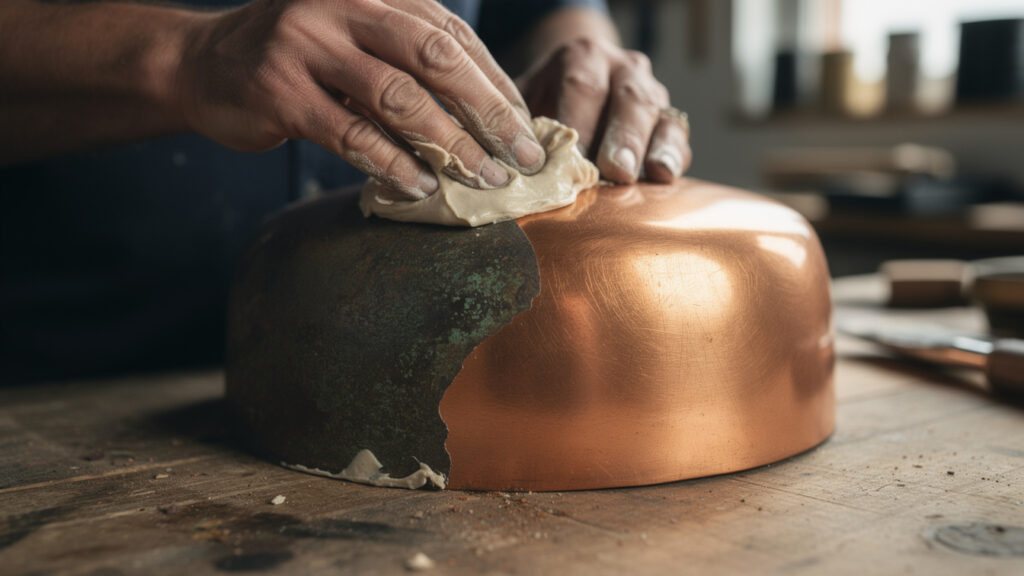
Over time, copper’s beautiful surface can succumb to tarnish, creating an unsightly dullness. This happens as a result of oxidation, where copper reacts with oxygen in the environment, forming a layer of copper oxide. While some might appreciate the greenish patina that develops—a la the Statue of Liberty—many of us prefer the radiant shine of polished copper. Unfortunately, neglecting maintenance can lead to heavy tarnishing that’s both a headache and an eyesore.
So how often should you be cleaning your copper? For those who enjoy that brilliant, shiny look, every three months is recommended. On the other hand, if you lean towards the rustic aesthetic, every six months will keep oxidation at bay without eliminating that charming patina.
Craftsmen’s Natural Mixture for Restoration
The beauty of cleaning copper lies in how simple and old-fashioned the solutions can be. Craftsmen often rely on a special mixture of lemon juice and salt, a duo that does wonders against tarnish. The citric acid in lemon juice breaks down tarnish while the salt acts as a gentle abrasive, allowing you to scrub without scratching the surface.
To create this powerful cleaning paste, mix two parts salt with three parts lemon juice to form a thick mix. Apply it liberally to the tarnished area, scrubbing gently in small circles. If stubborn stains persist, a quick dip of a fresh lemon half in salt can work miracle! 🚀
For particularly challenging oxidation, another method to consider involves vinegar or even ketchup—yes, you heard me right! Both products pack a punch; vinegar’s acetic acid and ketchup’s natural tomato acids combine to dissolve tarnish effectively.
Practical Tips for Copper Maintenance
Keeping copper in tip-top shape is all about establishing a routine. Here are essential tips to maintain that radiant shine:
- Wash your copper regularly using warm, soapy water before applying any cleaning mixtures. This removes dust and grime. 🧼
- Always rinse with warm water after cleaning and dry with a lint-free towel to prevent water marks. 🚫💧
- If you prefer a polished look, apply a thin coat of mineral oil post-cleaning to help slow down oxidation. 💧✨
- Store unpolished copper in a cool, dry area. This will prevent tarnishing from humidity and air exposure. 🏡
Advanced Cleaning Techniques
Sometimes, tarnish can be so severe that basic cleaning won’t cut it. If your copper has been neglected for years, a more aggressive approach may be necessary—specifically, heating the copper in a solution of vinegar and water.
Begin by mixing one part vinegar with three parts water, adding a tablespoon or two of salt. Submerge your copper piece in the solution, then bring it to a boil. Keep an eye on it: as the tarnish starts to fall away, you’ll need to turn off the heat. This method can quickly renew even the most neglected copper items.
Understanding Your Copper
Before diving into the world of copper restoration, it’s essential to know what you’re working with. Some copper items are lacquered, meaning they have a protective finish. Test for lacquer by rubbing a hidden spot with a vinegar-soaked cloth; if tarnish comes off, it’s likely untreated and ready for your natural mixture treatment.
Additionally, some items may be copper-plated, which requires more gentle handling. Always ensure you are using appropriate cleaning methods to preserve your treasures.
The Future of Copper Maintenance: Eco-Friendly Solutions
In an era increasingly focused on sustainability, switching to natural cleaning solutions resonates with many. Why waste money on chemical cleansers that can harm both your health and the environment? Craftsmen honoring traditional methods recognize that sometimes, the tried-and-true ways are the best. Leveraging household ingredients is not only cost-effective but aligns with a lifestyle that values eco-friendliness.
Next time you spot a piece of tarnished copper in your home, remember the simple, potent methods at your disposal. Whether it’s lemon juice, salt, or vinegar, these natural mixtures allow you to restore, maintain, and honor the beauty of copper without the fuss.