
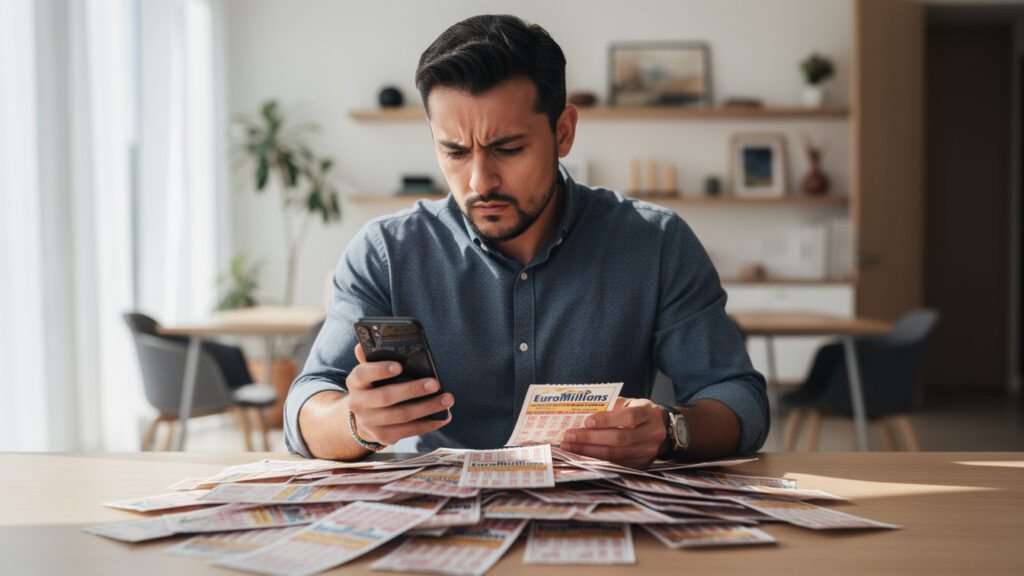

The EuroMillions lottery, an enticing blend of excitement and hope, continues to attract millions despite the painfully low odds of winning. In a world where so many of us chase dreams, this game of chance stands out as a paradox, inviting players to invest in what seems like a futile endeavor. But what lies behind this persistent behavior? Let’s delve into the fascinating psychology and statistics that explain why players keep buying tickets, despite the evidence stacked against them.
Highlights
- Psychological Factors: Gamblers often overestimate their winning probabilities due to cognitive biases. 🧠
- Low Winning Odds: The odds of winning the EuroMillions jackpot are about 1 in 139 million. 🎲
- Social Dynamics: Playing the lottery often has communal aspects that add to its appeal. 🤝
Did you know? The chances of winning the EuroMillions jackpot are lower than being struck by lightning! ⚡️
The Allure of the Jackpot
The massive payouts of the EuroMillions lottery are simply captivating. A single ticket can grant access to a fortune, essentially outpacing the hustle of traditional financial growth strategies. For many, it’s not just about the money; it’s about the possibility of life-changing scenarios—travel, luxury, and newfound freedom. The sheer magnitude of potential prizes can amplify the urge to play, sometimes requiring players to disregard the practicality of their odds.
Take a moment to consider this: if you’re in the lottery line, surrounded by people buzzing with excitement, that energy is contagious. It’s not purely about individual strategies; there’s a community element at play. My friends and I often joke about how we’ll all buy tickets together, envisioning what life would be like if one of us won. The thought conjures images of lavish trips and charitable contributions, reinforcing a shared hope that sustains ongoing participation.
The Numbers Game: Understanding the Odds
Many players approach the EuroMillions with a somewhat flawed understanding of probability. While statistics reveal that the odds of hitting the jackpot are astonishingly low—approximately 1 in 139 million—the allure of “maybe this time” keeps people investing their hard-earned dollars. This psychological disconnect can be fascinating; as established research shows, our brains often misinterpret low probabilities as more favorable outcomes. It’s akin to believing you’re more likely to win the lottery than suffer a life-altering misfortune.
With the EuroMillions, the math is simple yet daunting. The power of a number like 139 million is rarely grasped in a visceral way. For most of us, the idea of losing amounts to acknowledging that something is mathematically improbable. Surely, everyone knows a friend-of-a-friend who won big, and that narrative skews our perception. We think, ‘It could be me next.’ Yet, statistically, the odds remain oblivious to our hopes.
Cognitive Biases and Their Impact
The concept of cognitive bias plays a significant role in why people continue to play the lottery. Players often fall prey to the Gambler’s Fallacy, which leads them to believe that because they haven’t won recently, they’re due for a win. This line of thinking can be dangerously misleading. In reality, every draw is independent; past outcomes don’t affect future ones. Yet, this allure of ‘being due’ continues to entice players.
Additionally, the availability heuristic, where people judge the likelihood of an event based on how easily they can recall examples, comes into play. When we hear about EuroMillions winners splashed across the media, our minds latch onto these stories, interpreting them as signals of our own potential success instead of far-off anomalies.
The Role of Social Influence
Another pivotal factor driving participation in lotteries like EuroMillions is social dynamics. For many, playing the lottery is a collective experience—friends and family engage together, establishing a sense of unity and shared aspiration. There’s a certain joy that derives from discussing dreams and strategies alongside others. Social norms and peer pressure can lead to increased participation, with people bolstered by the excitement surrounding group purchases.
This community element can have surprising implications. It turns a simple ticket purchase into a bonding experience, which provides people with emotional returns that transcend monetary gains. The thrill of hoping for a mutual win can transform the act of buying a ticket from a solitary gamble to a collective dream. It reinforces the idea that you’re not alone in this venture, enticing players to keep trying their luck.
Finding Meaning in Losing
Interestingly, the act of losing—far from being a deterrent—can reinforce a player’s commitment to future participation. When individuals experience near-misses or thrill from the possibility of winning, the brain rewards them with dopamine, similar to what you experience during a small win. This translates into an emotional high, which can be compelling motivators to continue playing.
Treating the lottery as a form of entertainment rather than a legitimate means of income generates a healthier mindset towards participation. Many players spend what they can afford to lose, deriving enjoyment from the playful anticipation of winning. This perspective helps maintain a balance, allowing for continued participation without spiraling into detrimental gambling behaviors.
Concluding Thoughts
The world of EuroMillions is a fascinating intersection of hope, psychology, and mathematics. While the odds may be stacked against players, it’s intriguing to consider the motivations that drive them to return time after time. What starts as a simple ticket purchase transforms into a catalyst for dreams, community bonding, and sometimes, a healthy escapism.
So, as the next draw looms large, what’s your strategy? Millions of players may consider buying just one more ticket, buoyed by the thoughts of ‘what if.’ Whether you’re in it for fun or a desperate hope for financial freedom, the EuroMillions continues to be a game of dreams—albeit with sobering odds. Ultimately, it’s not just about the money; it’s about the thrill and the possibility, even when that possibility feels elusive.