
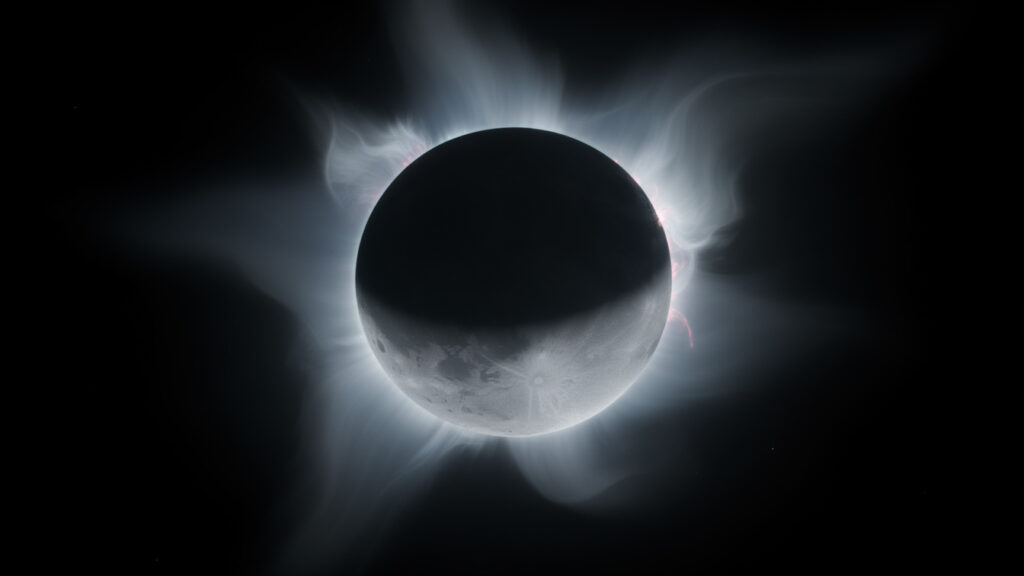

Imagine standing under a bright blue sky, only to be enveloped in total darkness for a staggering six minutes—sounds surreal, right? On August 2, 2027, that dream-like scenario will become a reality. Known as the “Great North African Eclipse,” this total solar eclipse will deliver a breathtaking experience that won’t be easily forgotten. With its extraordinary duration and vivid astronomical significance, it’s set to captivate millions across Southern Europe, North Africa, and parts of the Middle East.
Highlights
- Six Minutes of Total Darkness ☀️🌑: An awe-inspiring duration for any solar eclipse.
- Path of Totality 🌍: Crosses Southern Spain, North Africa, and the Middle East.
- Exceptional Viewing Locations 🏺: Including Luxor, Egypt and Sfax, Tunisia.
- Cultural Significance 📚: Eclipses bring communities together, merging science with history.
Did you know? The last total solar eclipse that was visible from land across multiple continents occurred in 1991, making this event a rare opportunity not to be missed!
So what exactly makes this eclipse stand out? For starters, it’s the combination of several celestial events that make this a once-in-a-lifetime occasion. The alignment of the Earth, Moon, and Sun will result in the Moon completely obscuring the Sun’s light for an impressive total of 6 minutes and 22 seconds in prime viewing areas. While total solar eclipses are common, those of this length can be counted on one hand over the next century.
The Path of Totality: A Journey Across Continents
This eclipse will trace a remarkable path, starting over the North Atlantic Ocean before making its way to land. The journey kicks off on Southern Spain’s Costa de la Luz, a place aptly named “Coast of the Light.” Once it hits shore, viewers in Gibraltar and then Morocco will have their chance to witness this dazzling display.
As it travels down to Africa, locations like Luxor and Berenike in Egypt will experience the longest durations of darkness, reaching up to 6 minutes and 22 seconds. These cities are famed not just for the eclipse but the rich history they harbor, offering an impressive backdrop for this celestial event. It’s not just about the darkness; it’s cultural and historical significance intertwined with science and awe.
The Science Behind Six Minutes of Darkness
Understanding why this eclipse is expected to last so long involves delving into orbital dynamics. The Moon’s elliptical orbit means it doesn’t always appear the same size in our sky. During this eclipse, the Moon will be at its perigee—its closest point to Earth—as it travels directly between Earth and the Sun. As a result, it will cast a larger shadow, prolonging the totality experienced by those lucky enough to be in its path.
Moreover, the eclipse’s path hugs the equator, where the Earth’s rotational speed is highest. This peculiar alignment means that the lunar shadow will move slower across the ground, extending the time we get to bask in the eerie beauty of total darkness.
Best Places to Witness the Eclipse
Choosing where to view the eclipse can make or break the experience. Here are some ideal locations to consider if you’re planning to witness this remarkable event:
- Luxor, Egypt 🏺: At 6 minutes and 20 seconds of totality, it’s a site filled with ancient wonders like the Valley of the Kings.
- Tunisia 🇹🇳: Sfax offers a cooler climate with a solid eclipse duration of about 5 minutes and 41 seconds.
- Southern Spain & Gibraltar 🇪🇸: Cities like Tarifa provide excellent options, albeit with slightly shorter totality (around 4 minutes).
The Cultural Impact of the Eclipse
Total solar eclipses have a unique power to unite people. When six minutes of complete darkness descends, cultural and political differences fade as communities gather under the same sky. It’s a moment for shared wonder and, for some, a deep spiritual experience. Throughout history, eclipses have inspired myths and stories, often feared as omens. Today, however, they draw crowds excited for a scientific spectacle.
Many countries along the eclipse’s path are bracing for an influx of “eclipse chasers.” Hotels and local businesses are ramping up preparations to accommodate visitors eager to witness this rare celestial event. It’s not just about watching; it’s about experiencing the atmosphere that comes with being part of such a momentous occurrence.
The wait is almost over. Keep your calendars marked for August 2, 2027. As millions look skyward, prepare to be part of not just an astronomical event, but a profound human experience—an exhilarating journey into the cosmic wonders of our universe. In a world filled with distractions, let’s pause to appreciate the breathtaking beauty and mystery that surrounds us.