
There’s something almost poetic about tending to houseplants. They breathe life into our homes, but for many, they also serve as testaments to a hopeful gardener’s failures. As winter settles in, I often hear cries of despair—“Why are my houseplants dying?” It’s a relatable plight, especially in these colder months when indoor heating wreaks havoc on humidity levels. Let’s unravel this mystery together and, more importantly, highlight those sneaky watering mistakes that might be sabotaging your plant care efforts.
Highlights
- 🌱 Overwatering is one of the biggest culprits behind plant demise.
- 💧 Underwatering can lead to wilting and stunted growth.
- 🌞 Proper light exposure is essential for thriving plants.
- 🌿 Soil quality plays a critical role in nutrient absorption and moisture retention.
- 🔍 Consistency in care can dramatically improve plant health.
Did you know? Most plants suffer not from neglect, but from care that misaligns with their actual needs!
The Overwatering Trap
Let’s talk about the wet blanket that is overwatering. It’s so easy to assume that if a little water is good, a lot must be better, right? Unfortunately, that’s a one-way ticket to root rot city. When the soil is perpetually moist, roots drown, unable to access the oxygen they need. It’s a slow death, masked by an overzealous watering routine.
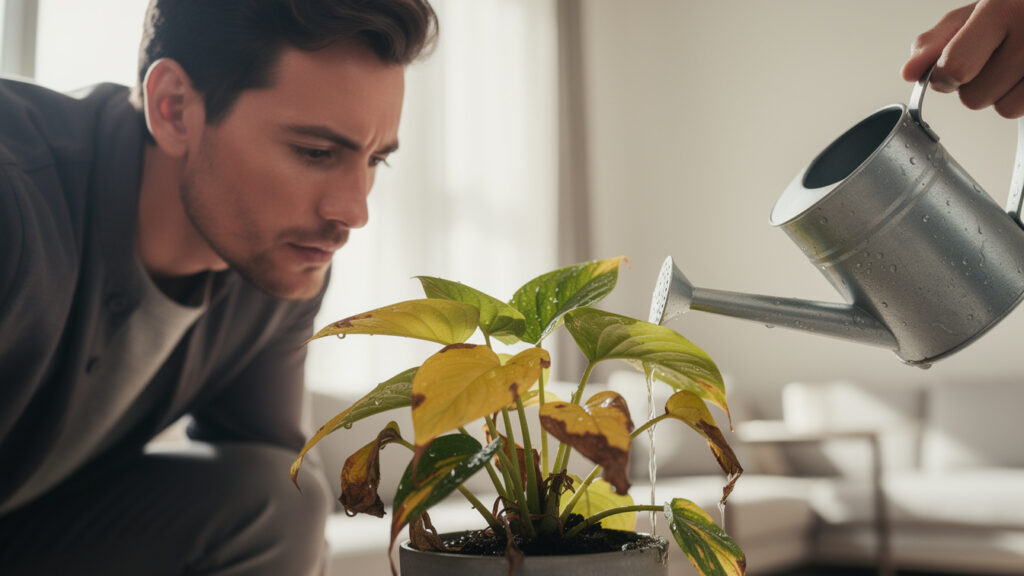
Signs of overwatering may present themselves as yellow leaves, soft stems, or persistently soggy soil. The golden rule is simple: before watering, check the top inch of the soil. If it feels moist, wait. Plants can recover from being slightly dry far more readily than from being perpetually damp.
Underwatering: The Silent Killer
While overwatering tends to steal the spotlight, underwatering can sneak up on even the most attentive plant parents. Dry soil can quickly lead to crispy leaves and wilting—a cry for help that is easy to overlook until it’s nearly too late. This often happens in winter, when indoor air becomes suckingly dry. It’s a delicate balancing act; while you should water regularly, it’s vital to water deeply, ensuring the moisture reaches the roots.
I’ve found that sometimes just sticking a finger into the pot can make all the difference. If the soil feels dry and crumbly, definitely reach for that watering can. But remember to thoroughly soak it until it drains from the bottom—no one enjoys a cute little desert in their pot!
Lighting: Finding the Sweet Spot
Let’s not overlook the importance of light. It’s one of those elements that might go unnoticed until your plant starts showing signs of distress. Insufficient light exposure can lead to leggy growth, pale leaves, or even flopping over in an act of desperation. Conversely, too much direct sunlight can scorch and fry the delicate leaves of indoor plants.
The solution? Carefully assess your plant’s light needs. Some thrive in low-light conditions while others crave direct sunlight. Simply relocating a plant a few feet closer to a window can dramatically change its health status. If natural light is scarce, consider investing in grow lights—they’re like a spa day for your plants, providing the perfect spectrum of light to mimic the sun.
The Importance of Quality Soil
Soil isn’t just dirt; it’s the lifeblood of your houseplants. The wrong type or poor-quality soil can lead to drainage issues or compacting, obstructing roots from accessing nutrients or water. Succulents require fast-draining soil, while tropical varieties prefer something that retains a bit of moisture without becoming soggy. Refreshing the soil yearly not only improves drainage but provides a healthier habitat for the roots.
Looking for clear signs of soil distress? Pay attention! If you notice the top crust of soil drying out while the bottom remains soggy, it’s time for a change. A well-aerated, suitable potting mix can drastically improve plant health.
Consistency Is Key
One mistake many make is failing to establish a consistent care routine. It’s crucial to determine a schedule that suits your plant’s preferences. This means not just watering regularly but also incorporating feeding and thorough checks for pests or diseases.
Patience comes into play here. Once a plant begins to flourish, it’s usually best to keep its environment stable—frequent relocations or care adjustments can lead to stress. Observe how your plants respond over time to find that sweet spot. Let’s be honest: just like relationships, plants thrive on consistency!
Time to Take Action!
So, what’s the takeaway from all this? If your houseplants are facing perpetual struggle, start by assessing your watering habits. Are you giving them too much or too little? Lighting conditions need adjustment? Is the potting soil right for your specific plant? Dive in, get your hands dirty, and engage with your greenery! You might just find that the secret to thriving houseplants lies in the small details you’ve been overlooking.
Remember, even the most seasoned plant owners can overlook these essentials, so don’t be too hard on yourself. The joy of nurturing these green companions far outweighs the occasional misstep. Happy planting!